Q&A: "What is a Good Listing Acquisition Cost in Castle Rock?"

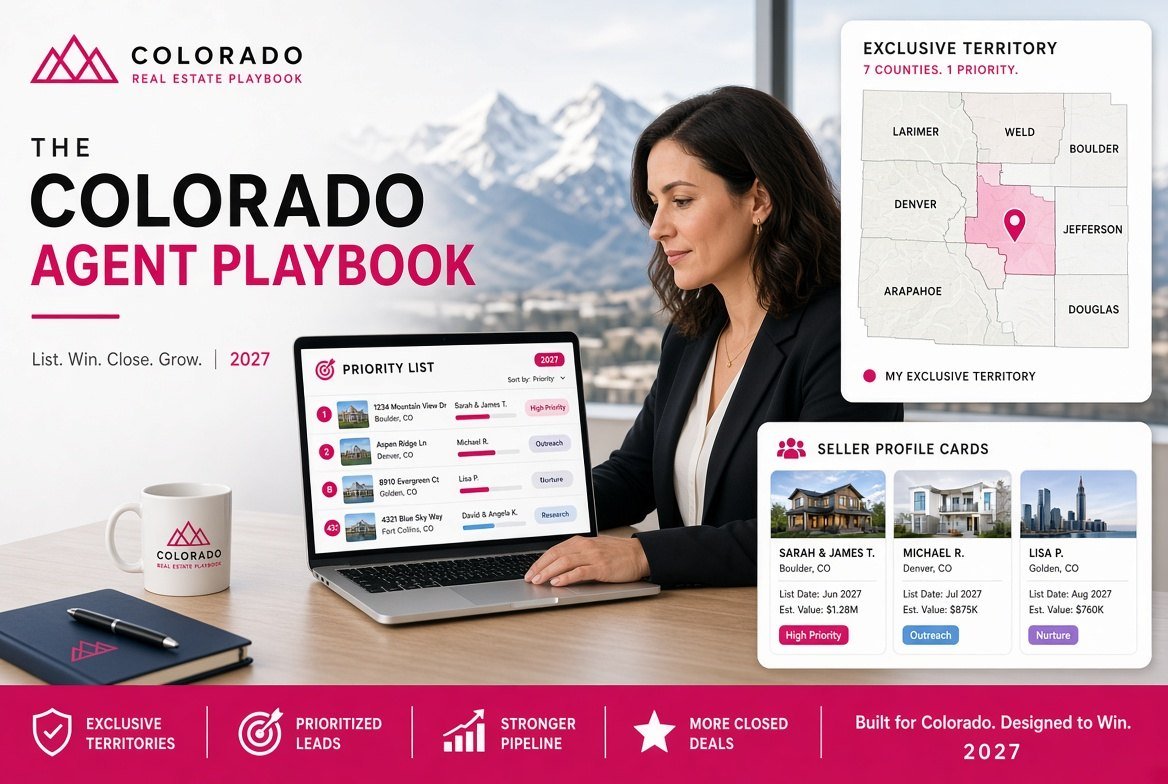
The 2027 Castle Rock Brokerage Playbook: Stop Chasing GCI and Master Your Listing Acquisition Cost (LAC)
As we project forward into the 2027 Castle Rock real estate landscape, the agents who dominate Douglas County won't necessarily be the ones with the flashiest billboard along Interstate 25 or the highest top-line revenue. They will be the surgically precise business operators who master a single, often overlooked metric: Listing Acquisition Cost (LAC).
For decades, real estate agents in zip codes 80104, 80108, and 80109 have worshipped at the altar of Gross Commission Income (GCI). But GCI is a vanity metric; net profit and unit sustainability are sanity metrics. If you generate $500,000 in gross commissions but spend $200,000 buying recycled buyer leads and waste another $150,000 in uncompensated time chasing cold calls, your real margin is dangerously thin. In a evolving market characterized by shifting commission structures, inventory realignments in master-planned communities like The Meadows, Terrain, and Crystal Valley Ranch, and rising digital advertising costs, high-LAC models are unsustainable.
It is time to re-engineer your business plan for 2027 by transitioning away from broad-net lead buying and stepping into the era of Opportunity Intelligence.
---Decoding Listing Acquisition Cost: The Metric That Defines Your Profitability
To fix your unit economics, you must first define what Listing Acquisition Cost actually means. LAC represents the total operational spend—combining direct financial outlays and indirect time expenditure—required to secure a single signed listing agreement in the Castle Rock market.
The mathematical formula for LAC is expressed as:
$$\text{LAC} = \frac{\text{Total Direct Marketing Spend} + \text{Value of Agent Time Invested}}{\text{Total Signed Listings Acquired}}$$
Why Is Your LAC Alarmingly High Right Now?
If you are relying on traditional portal leads (such as broad-net syndicated platforms), you are caught in a fundamental structural trap. You are paying top dollar for dynamic buyer/seller traffic that is simultaneously sold to 3 to 5 competing agents across the Front Range. Here is the reality of that model:
- The 99% Waste Factor: National portals convert at an average rate of 1% to 1.5%. That means you are paying for the 98.5% to 99% of users who will never list their property, are simply window-shopping, or are years away from a transaction.
- The Castle Rock Time-Tax: Digging through hundreds of low-intent digital queries consumes dozens of hours weekly. In a market where the median home price hovers near $725,000, an elite agent's operational time is worth upwards of $150 to $250 per hour. Spending 20 hours a week chasing unvetted portal forms adds thousands of dollars in hidden labor costs to your LAC.
- The High-Price Point Trap: In luxury enclaves like Castle Pines Village or Montaine, general portal leads rarely yield premium listings. High-net-worth sellers do not fill out internet forms; they demand hyper-local authority and strategic discretion.
The Paradigm Shift: From Cold Lead Generation to Opportunity Intelligence
To dramatically drive down your LAC and insulate your business for 2027, you must abandon reactive lead acquisition in favor of Opportunity Intelligence (OI).
Opportunity Intelligence is the integration of predictive data analytics, machine learning, and hyper-local market signals to identify the top 5% of property owners who are statistically most likely to sell within the next 6 to 12 months—long before they ever click a link on a public search portal.
How Predictive AI Unlocks Castle Rock Sellers
Instead of marketing to all 25,000+ households in Castle Rock, Opportunity Intelligence cross-references hundreds of micro-data points across Douglas County public records, consumer behavior trends, and economic indicators. Predictive algorithms flag high-probability listing opportunities based on:
- Substantial Equity Maturation: Property owners in neighborhoods like Plum Creek or Founders Village who have accumulated 50%+ equity and have crossed the 7-to-10-year residency mark.
- Demographic Shift Triggers: Empty-nesters in two-story homes looking to downsize to single-level maintenance-free living in Regency at Montaine.
- Financial and Employment Migration: Job transitions within the Denver Tech Center (DTC) corridor or remote-work adjustments prompting relocation out of or across Douglas County.
- Life Stage Changes: Marital status changes, additions to the family, or estate transitions tracked via municipal and public record updates.
By narrowing your focus exclusively to this top 5% high-intent cohort, your marketing budget isn't spread thin across a massive audience—it is concentrated with high frequency on the exact property owners ready to move.
---Financial Analysis: Portal Lead Model vs. Opportunity Intelligence
To demonstrate the impact on your bottom line, let's examine a direct financial comparison for a Castle Rock real estate advisor aiming to secure 12 listings per year.
| Strategic Metric | Traditional Shared Portal Leads | Opportunity Intelligence (Predictive AI) |
|---|---|---|
| Target Audience Size | Broad/Unfiltered (1,000+ random clicks) | Targeted Top 5% (200 high-intent homes) |
| Average Conversion Rate | 1.0% | 8.5% to 12.0% |
| Direct Annual Ad Spend | $24,000 | $9,600 |
| Agent Hours Spent Prospecting | 500 hours/year ($100,000 time cost) | 120 hours/year ($24,000 time cost) |
| Total Blended Acquisition Spend | $124,000 | $33,600 |
| Calculated LAC (per Listing) | $10,333 | $2,800 |
By transitioning to an Opportunity Intelligence framework, you achieve a 72% reduction in Listing Acquisition Cost while reclaiming over 380 hours of operational time to spend serving clients, negotiating contracts, and expanding your professional network.
---Building Your Data-Driven 2027 Business Blueprint
If you are building your 2027 strategic growth plan today, implement this step-by-step roadmap to eliminate wasted capital and build a high-margin, listing-centric real estate practice in Castle Rock.
Step 1: Audit Your Current LAC
Calculate your true historic LAC over the past 24 months. Total your ad spend, print costs, platform subscriptions, and sign-ups. Multiply the hours spent chasing those leads by your target hourly rate. Divide this total by the number of listings taking to market. If your LAC exceeds 15% of your gross commission per deal, your business model requires immediate optimization.
Step 2: Deploy Hyper-Local Predictive Data Tools
Partner with data platforms that ingest Douglas County assessor records, MLS historical trends, and consumer predictive scoring. Focus your marketing budget on micro-farms within specific subdivisions—such as identifying the 150 homes in The Ridge at Castle Pines North that meet specific sell-propensity thresholds.
Step 3: Develop Omnichannel "Value-First" Messaging
High-intent sellers do not respond to generic "I'm #1 in Castle Rock!" flyers. Deploy precise, informative content directly to your target 5% list:
- Hyper-Local Equity Reports: Send tailored analyses detailing exact equity appreciation metrics based on recent sales in their specific neighborhood pod.
- Property Tax Optimization Insights: Provide guidance on navigating Douglas County property tax assessments—a major topic of interest for local homeowners.
- Direct Mail + Digital Retargeting Overlap: Pair physical high-end mailers with targeted geofenced digital ads on social platforms, ensuring high-frequency exposure exclusively to your predictive seller pool.
Step 4: Establish a Fiduciary-First Conversion Workflow
Because Opportunity Intelligence connects you with sellers *before* they officially enter the interview phase, your conversation must be consultative, advisory, and fiduciary-focused. Position yourself not as a traditional salesperson, but as a local real estate wealth manager who understands micro-market inventory trends across Castle Rock.
---The Bottom Line for Castle Rock Agents
The future of real estate brokerage in Castle Rock belongs to the disciplined, data-literate practitioner. Continuing to throw capital at shared, low-intent portal leads is a race to the bottom that destroys profit margins and leads to operational burn-out.
As you build your 2027 business plan, shift your focus away from superficial GCI numbers and take absolute control of your Listing Acquisition Cost. By leveraging Opportunity Intelligence to target the top 5% of motivated sellers in Douglas County, you will build a resilient, high-margin real estate practice engineered for long-term growth.