Q&A: "What is a Good Listing Acquisition Cost in Centennial?"

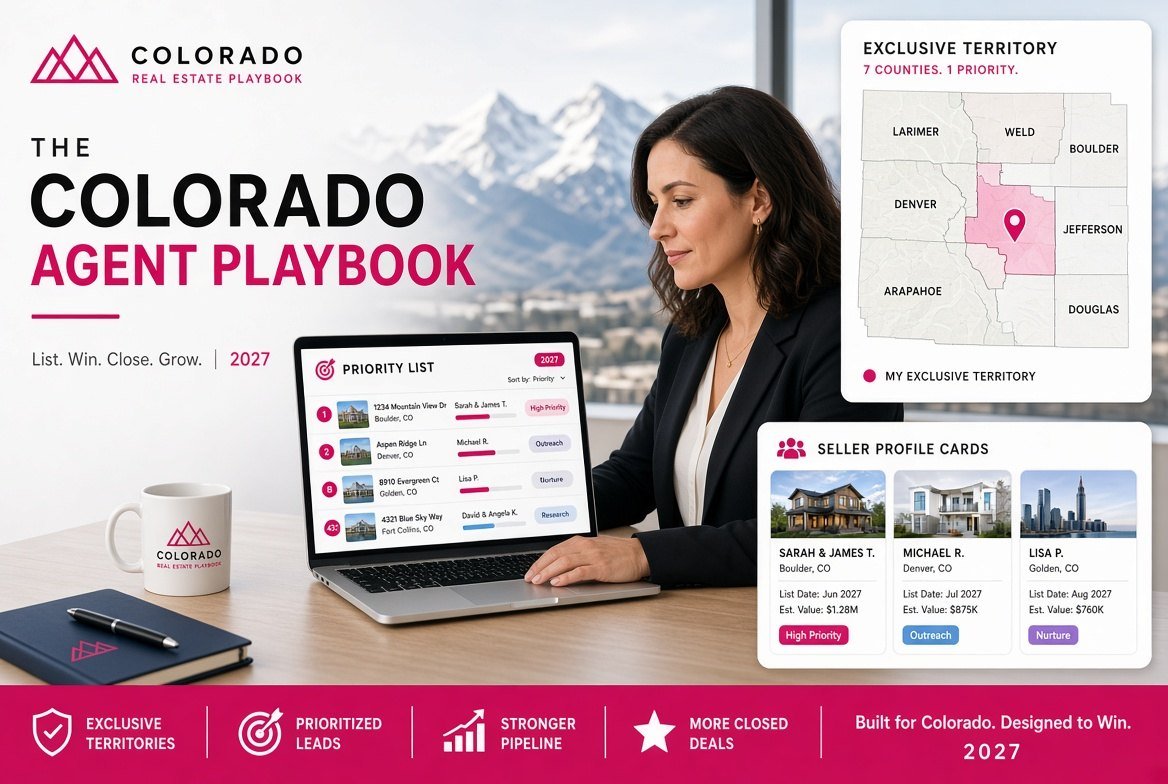
The GCI Illusion: How Centennial Real Estate Visionaries Are Re-Engineering Their 2027 Business Plans Around Listing Acquisition Cost (LAC)
For decades, the real estate industry has worshipped at the altar of Gross Commission Income (GCI). Real estate brokerages across the Denver Metropolitan Area celebrate top producers based on top-line volume, plastering awards across social media for $20 million or $50 million in production. However, in the sophisticated, high-equity micro-markets of Centennial, Colorado, this vanity metric is quietly bankrupting agents who fail to look beneath the surface.
As we construct business plans projecting toward 2027, the macro-economic landscape of Centennial—defined by sticky mortgage rates, a locked-in inventory environment, and hyper-competitive agent densities around the Denver Tech Center (DTC)—demands a radical financial shift. Top-line volume is meaningless if your net margin is eroded by exorbitant client procurement expenses. The defining metric of the next decade is not GCI. It is your Listing Acquisition Cost (LAC).
If your 2027 growth strategy relies on traditional lead generation, shared portal buying, and brute-force cold calling, you are running a high-risk operational model. Here is an authoritative guide on how to calculate, lower, and optimize your LAC in Centennial using modern Opportunity Intelligence.
Deconstructing Listing Acquisition Cost (LAC) in the Centennial Market
What precisely is Listing Acquisition Cost (LAC)? Put simply, LAC represents the total aggregate spend—combining direct capital outlay and the monetized value of your time—required to secure a single executed listing agreement.
The standard formula for calculating true LAC is:
LAC = (Direct Marketing & Lead Tech Spend + Monetized Time Spent Prospecting) ÷ Total Listings Secured
The Shared Portal Trap in Centennial
Why are real estate professionals in zip codes like 80112, 80121, and 80122 watching their operational margins shrink? The answer lies in the traditional portal lead model. Buying shared leads from major aggregation platforms forces agents into a race to the bottom.
- The 99% Waste Factor: When you purchase syndicated buyer and seller leads in Arapahoe County, you are funding the 99% of top-of-funnel browsers who have no short-term intent to execute a transaction. You pay for the tire-kickers just to reach the single viable client.
- The High Price of Time: Sifting through hundreds of unvetted, shared leads requires immense operational bandwidth. If an elite agent values their advisory time at $250/hour and spends 15 hours a week chasing cold portal leads, that represents an uncaptured cost of $3,750 per week in wasted labor capital.
- Hyper-Local Burnout: Centennial homeowners in premier subdivisions such as Willow Creek, Heritage Greens, and Piney Creek are increasingly immune to generic sales scripts. They are bombarded with automated texts, unsolicited cold calls, and generic print mailers, driving conversion rates down to sub-1% levels.
The Local Market Reality: Why Centennial Demands Precision
Centennial is not a homogenous suburban landscape; it is an intricate mosaic of distinct micro-neighborhoods. Winning a listing in Foxridge requires a fundamentally different positioning strategy than securing a property in Homestead or the custom estates of Foxfield-adjacent enclaves.
Consider the structural challenges currently facing Centennial real estate professionals:
- The Rate-Lock Effect: A significant portion of Centennial homeowners hold primary mortgages below 4%. They will not move simply because a generic mailer asks, "Do you want to know what your home is worth?"
- High Equity, Ultra-Savvy Sellers: The median household income in Centennial sits well above state and national averages. Local residents are corporate executives, tech professionals, and seasoned investors who expect fiduciary-level market analysis, not aggressive sales pitches.
- Compressed Margins: Increased business operational costs, elevated media/production standards, and legal shifts around commission structures mean every dollar spent acquiring a client must yield a quantifiable return on investment (ROI).
To scale profitably toward 2027, you cannot simply spend more money on legacy marketing channels. You must deploy Opportunity Intelligence.
Transitioning to Opportunity Intelligence: Target the Top 5%
Opportunity Intelligence (OI) is the strategic evolution from broad-net demography to predictive, data-driven targeting. Rather than spending thousands of dollars spraying marketing materials across an entire zip code, Opportunity Intelligence utilizes machine learning, public record synthesis, and consumer trend algorithms to isolate the top 5% of property owners who are statistically most likely to sell within the next 6 to 18 months.
How Predictive AI Filters the Centennial Market
Predictive AI algorithms synthesize dozens of disparate hyper-local indicators to build an actionable seller probability matrix. In Centennial, these indicators include:
- Life Stage & Demographic Transitions: Triggers such as empty-nester indicators in mature neighborhoods like Smoky Hill or Knolls, where long-term owners are evaluating maintenance-free patio homes or out-of-state retirement.
- Equity Threshold Leverage: Identifying owners who have crossed specific home equity milestones (e.g., 70%+ equity built over a 15-year holding period), opening options for 1031 exchanges or downsizing strategies.
- Financial & Corporate Mobility Clues: Tracking regional employment trends near the Denver Tech Center, corporate relocations, public record distress filings, or changes in legal ownership structures.
- Digital Footprint & Engagement Tracking: Capturing subtle, localized consumer behavior shifts—such as recurring interactions with municipal zoning updates, home renovation permit filings, or specific regional tax assessment searches.
By filtering out the 95% of homeowners who are anchored in place, you concentrate 100% of your marketing capital and personal energy solely on high-probability opportunities. The strategic result? Your conversion rates skyrocket, and your Listing Acquisition Cost (LAC) drops exponentially.
The 2027 Master Blueprint: Building Your Low-LAC Centennial Business Plan
If you are serious about building a high-margin, highly scalable real estate practice in Centennial over the next three years, implement this step-by-step operational blueprint.
Step 1: Audit Your Historical LAC
Before launching a 2027 plan, calculate your historic client acquisition baseline. Review your past 24 months of production:
- Add up total spend on portal leads, print campaigns, digital ads, and CRM tech stack.
- Assign a firm hourly rate to your personal prospecting hours.
- Divide that grand total by the exact number of closed listing transactions.
If your LAC exceeds 15% to 20% of your average Gross Commission Income per transaction, your acquisition engine requires immediate structural optimization.
Step 2: Micro-Farm with Predictive AI Platforms
Replace broad geographic farming with predictive hyper-local clusters. Instead of mailing to an entire 3,000-home subdivision in Centennial, partner with predictive data vendors to isolate the top 150 high-probability properties within that neighborhood.
Allocate your capital toward high-touch, hyper-personalized campaigns directed specifically at this curated cohort: bespoke market reports, private equity reviews, and hyper-targeted digital media delivery.
Step 3: Deliver Fiduciary-Grade Advisory Content
Centennial homeowners do not need automated, surface-level automated valuations. They need deep market contextualization. Build assets that solve hyper-local problems:
- The Cherry Creek vs. Littleton School District Equity Analysis: Detailed reports showing how school boundary shifts impact long-term valuation appreciation across borders like Quebec St and University Blvd.
- Prop 123 & Local Zoning Impact Guides: Educating neighborhood communities on regional housing policies, accessory dwelling units (ADUs), and potential density adjustments in Arapahoe County.
- Tax-Deferred Wealth Preservation Seminars: Hosting advisory sessions tailored for long-time Centennial residents seeking to transition home equity into passive income streams without triggering massive capital gains taxes.
Step 4: Shift Time-Wealth into Fiduciary Relationships
When you stop chasing hundreds of unqualified, cold portal leads, you instantly liberate dozens of hours each month. Reinvest this newfound time capital into high-leverage relationship building:
- Conduct face-to-face Annual Property Reviews for your core sphere and predictive target lists.
- Build deep referral networks with local wealth managers, estate planning attorneys, and CPAs servicing the DTC corridor.
- Deliver unmatched, white-glove listing execution that turns every client into an exclusive lifetime advocate.
The Strategic Conclusion
The era of relying on raw vanity metrics like Gross Commission Income is coming to a close. High top-line revenue masked by soaring client acquisition expenses creates a fragile, high-stress business vulnerable to market corrections.
By shifting your focus to Listing Acquisition Cost (LAC) and powering your database with Opportunity Intelligence, you build an efficient, defensible, and wildly profitable real estate practice tailored specifically for the unique dynamics of Centennial, Colorado. Stop paying for the 99% who won't convert. Target the 5% who will, lower your cost of acquisition, and dominate your local market with statistical precision.